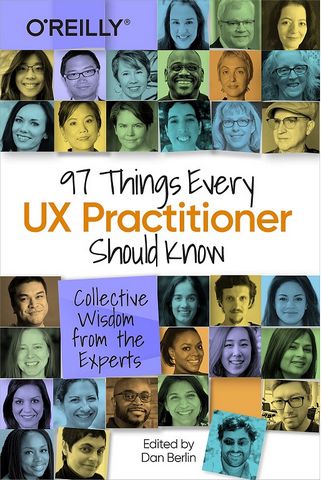
97 Things Every UX Practitioner Should Know. Collective Wisdom from the Experts
Зареєструйтесь або увійдіть, щоб додавати книги до списків
Зареєструйтесь або увійдіть, щоб отримувати сповіщення про наявність
Зареєструйтесь або увійдіть, щоб вести читацький щоденник
The user experience (UX) community is full of people who want to help others lead better lives. Whether we are making a website easier to use or creating designs that guide people to make healthier decisions, we just want to help others. This also applies to our colleagues across the industry: we want everyone who has chosen this occupation to thrive. That's why you'll often see more hugs than handshakes at UX conferences-everyone in the field is just so nice.
That's the intended spirit of this book-it's by the UX community and for the UX community, and it intends to give back to the UX community. To ensure that contributors extended beyond my personal circle, we had a submission process in which anyone could submit a chapter. This helped to solidify my theory about UXers being so nice. Every stranger I met during the process was generous and eager to give back to the community.
To round out the community giving, the authors have decided on a number of UX nonprofit organizations to which any book royalties will go, starting with Creative Reaction Lab in St. Louis and the Center for Civic Design. This book wasn't written to make a buck or to give people exposure. We wrote this book to help the UX community do great work.
Many people involved with UX came across the field by chance. My UX “aha” moment came during my customer support days, when I sat as a participant in a usability study. With my psych undergrad focus on visual space perception and my love of computer geekery, this seemed like the job for me! I was even more pleased to learn you don't need to be a designer to work in UX, since I thought I didn't have a creative bone in my body. This phrase would make Adam Connor bristle in our conversations, and he eventually convinced me that everyone is creative-it's just a matter of how creativity is expressed by or elicited from an individual. Researchers are creative problem solvers; strategists think creatively to give design projects meaningful direction; and, as I've learned in many design studios, anyone who can draw or imagine a rectangle can design.
This book is intended for everyone in the UX community, whether advanced practitioner or beginner: designers, researchers, UX strategists, developers, content strategists, managers, and executives. The goal was to make each chapter as practical as possible and to cover topics that even advanced folks may not have previously considered.
The chapters are organized into the different areas of interest in UX:
Career: Tips to advance your hireability
Strategy: Dealing with the fuzzy frontend of the design process
Design: Creating experiences for customers, employees, and other users
Content: Writing words that matter and that aren't an afterthought
Research: Gathering data from study participants to uncover actionable insights
We live in a service economy. Businesses must consider the priorities of their customers, members, patients, employees, and of all other users in their ecosystem. UX strategy, research, and design are the pathways to aligning experiences with people's expectations for how things should work. People all across the business world should be aware of how the UX sausage gets made. The authors of this book hope it provides information for everyone who wants to create great experiences for other people.







Коментарі
Немає коментарів. Будьте першим, хто залишить коментар!